THE 70TH WEEK OF DANIEL
By Gavin Finley MD - endtimepilgrim.org
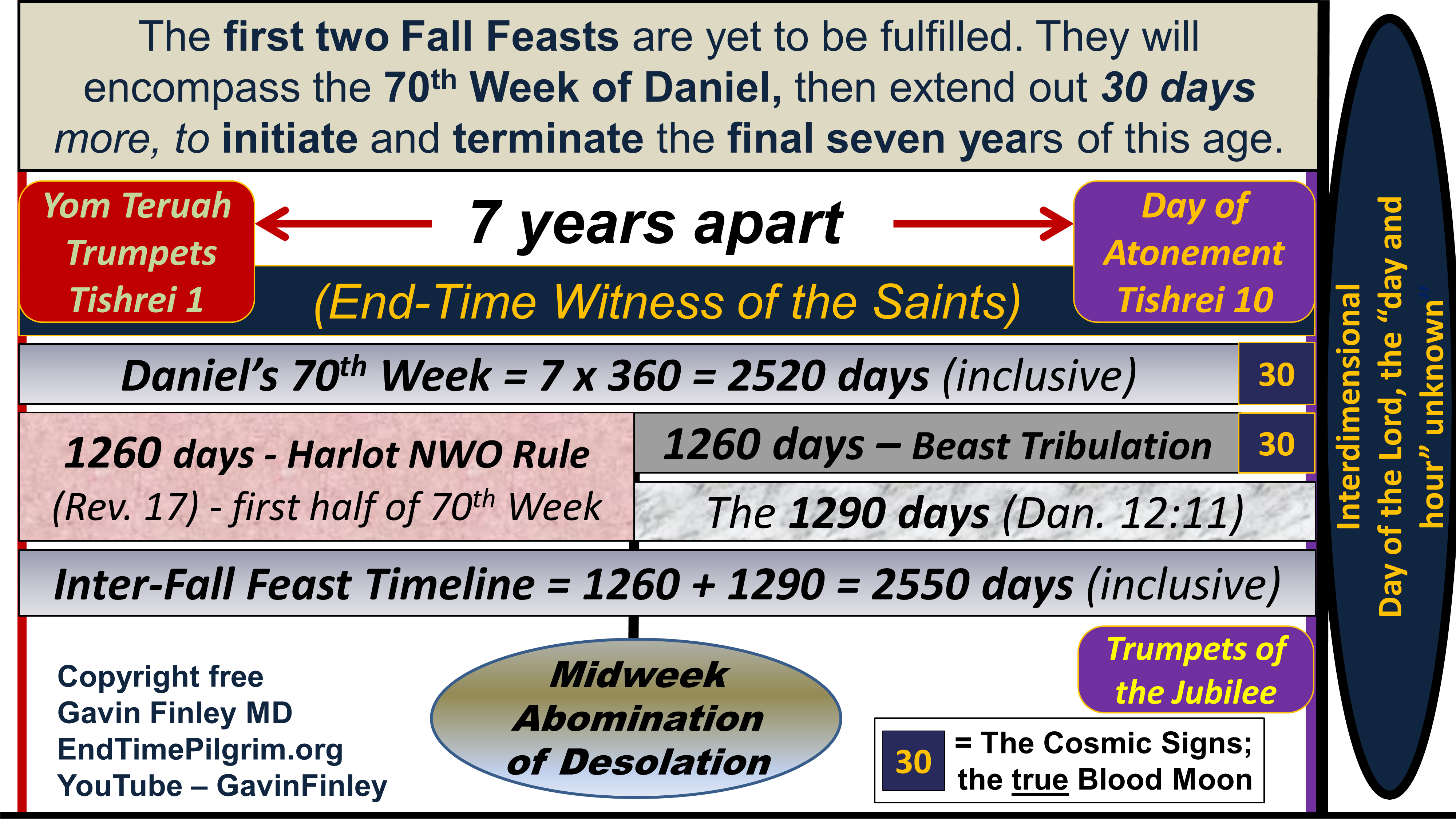
Click on the image below for a YouTube video showing how 86 moons and 10 days is a
time period precisely matching the 70th Week of Daniel and the final 7 years of this age.
|
|
There is a 19 year astronomical cycle which has been used to make a very accurate solar-lunar calendar.
Hillel's Hebrew calendar is based on this Metonic Cycle of 19 years = 235 lunar months.
Since its establishment in 359 C.E. it has approximated the passages of the sun and moon quite well.
The Metonic cycle.
It was discovered by the Greek mathematician, astronomer, geometer, and engineer
Meton of Athens.
He lived in the 5th century BC.
Meton discovered the 19-year Metonic cycle in 432 BC
and incorporated it into the luni-solar Attic calendar
and as a method of calculating future dates.
To see the Wikipedia article on the Metonic Cycles click HERE. Meton found that 19 solar years are almost equal to 235 lunar months and 6940 days. This was valuable information for those who sought to create a lunar calendar. An lunar calendar that kept accurate time with the new moons and equinoxes was a wonderful thing. Such a calendar could predict how the moons would come through in future years in relation to the solar equinoxes and cycles of years. More specifically the springtime month of Nisan could anticipate the arrival of those years that would see a 13th month, a second month of Adar and thus push the Passover month of Nisan further down the year. Before this astronomical calendar the Month of Nisan was pegged according to its other name, the month of Abib which means "ripe". This was the month that saw the barley ripe for harvest. So the month of Abib was an agricultural reckoning and its other name Nisan referred to its astronomical reckoning. And so before Meton's cycle and the Metonic calendar the months were set by the barley ripeness and by the sighting of the new moon. The first moon to come to fullness after the spring equinox was tagged as the month of Nisan, the first month in the religious calendar of the Hebrews. The renowned Hebrew rabbi and scholar Hillel II set forth the Hebrew calendar in 358 C.E.. It has been quite accurate. But the lunar cycles are growing longer as the moon slips away from the earth. So in this past century Hillel's Hebrew calendar is declaring the new moon a day early and sometimes the Passover month is a month later than the moon. Quite clearly it is showing signs of requiring some adjustment. Embolismal years are those years in which an extra (second) month of Adar, (a thirteenth month for that year), is inserted into lunar-solar Hebrew calendar. The extra month of Adar is inserted into the calendar as the time of the Spring equinox approaches. This month, the month of Nisan is also called the month of Abib, a word which means "ripe". It refers to the ripening of the barley harvest that marks the beginning of Spring. This is the agricultural reckoning of the Passover moon and month of Nisan or Abib. The month of Nisan marks the first month of Spring and sets the month of Nisan for the Passover and the beginning month of the Hebrew religious or ecclesiastical year. The Feasts that relate to the priestly ministry of Messiah come in the of Springtime. The big future events of the coming Kingdom of Messiah come in the Fall. The month of Nisan can be determined astronomically. is the first moon to come to fullness after the March 20-21 spring equinox. This Springtime equinoctial moon of Nisan is the Passover moon. Whenever the extra month of Adar, Adar 2 is added into the calendar it makes for a 13th month. This pushes Passover up further into the year. The lunar cycle is 29.53 days. So 12 moons see the passage of a bit over 354 days. This is 11.24 days short of the 365.24 days for the solar year. So the 12 moons fall behind by 11+ days each year or 7 times every 19 years. So these embolismal moons enable the moon reckoned to be Nisan to reach the spring equinox each year and not fall short of the barley harvest. The pattern in which these 7 extra months of Adar 2 are added into the springtime are shown in the table below. The extra month of Adar 2 is shown in RED in the table below. The cadence of the embolismal years as they track through the 19 year Metonic Cycle can also be appreciated and easily remembered in audio form as an "OOMP" in the "OOMP, PA, PA" pattern we see below. THE METONIC CYCLEBY CONVENTION THESE 7 EMBOLISMAL YEARS ARE NUMBERED 3, 6, 8, 11, 14, 17, 19 IN A 19 YEAR CYCLE. BUT IN THE 19 YEAR OOMP PA SEQUENCE I DID UP ABOVE THEY ARE NUMBERED FROM A DIFFERENT STARTING POINT. THESE EMBOLISMAL YEARS WITH 13 MONTHS ARE SHOWN IN RED WITH ASTERISKS IN THE TABLE BELOW. |
|
.................. Beginning of this Metonic cycle
1980 PA .................. End of this Metonic cycle
1999 PA .................. End of this Metonic cycle
2018 PA |
|
THE METONIC DANCE SEVEN EXTRA EMBOLISMAL MONTHS OF ADAR, (ADAR 2), EVERY 19 YEARS. 19 SOLAR YEARS = 19 x 365.242199 = 6,939.602 days. THE GREEK SCHOLAR METON IN ATHENS BACK IN THE 5th CENTURY B.C. NOTICED THAT THE PASSAGE OF 19 YEARS WAS EXCEEDINGLY CLOSE TO THE PASSAGE OF 235 MOONS. THE LUNAR CYCLE BACK THEN WAS 29.53025. (Now it is 29.530588). SO 235 MOONS = 6,939.608 DAYS WHICH MATCHED THE TIMESPAN FOR 19 YEARS, (19 x 365.242199 = 6,939.602) VERY WELL. SINCE 19 YEARS OF 12 MONTHS = 228 MONTHS THEN 7 OF THOSE 235 MOONS WERE EXTRA OR EMBOLISMAL MONTHS. THESE WERE IN EFFECT A 13TH MONTH FOR THAT YEAR. THAT EXTRA MONTH NEEDED TO BE ADDED TO THE YEAR 7 TIMES IN 19 YEARS. WHEN THOSE EXTRA SEVEN MOONS ARE SPACED OUT OVER 19 YEARS WE GET THE CADENCE GIVEN UP ABOVE. THIS PREDICTS HOW THE MOON WILL COME THROUGH EACH SPRING AND WHETHER AN EXTRA MONTH OF ADAR WILL BE CALLED FOR TO MOVE THE LAGGING MONTH OF NISAN UP 29.5 DAYS INTO THE SEASON OF THE BARLEY HARVEST AND THE SPRING EQUINOX. THOSE EMBOLISMAL YEARS, (7 IN 19 YEARS), WILL SEE A LATE PASSOVER FOR THAT YEAR. THE METONIC CYCLE, DISCOVERED BY METON OF ATHENS, WAS INCORPORATED INTO THE HEBREW CALENDAR BY THE JEWISH SAGE HILLEL 2 IN THE 4TH CENTURY B.C.. THE EXTRA MONTH OF ADAR IS INSERTED ACCORDING TO A 19 YEAR CADENCE. IF YOU COUNT OUT THE 19 YEARS OF THE CYCLE THE EMBOLISMAL YEAR WILL COME IN YEARS 2,5,8,10,13,16, and 19. THIS IS THE METONIC CYCLE AND IT WAS INCORPORATED INTO LUNAR CALENDARS TO VERY GOOD EFFECT BEFORE THE ROMANS CAME ALONG WITH THEIR RIGID SOLAR CALENDAR AND THREW THE LUNAR CYCLES OUT THE WINDOW. THE ROMAN CALENDAR IGNORED THE LUNAR CYCLES ENTIRELY. IT WAS 100% SOLAR, AS IS OUR GREGORIAN CALENDAR TODAY. BELOW WE SEE THE METONIC CYCLE AS IT (VERY NEARLY BUT NOT PERFECTLY) PLAYS OUT IN THE COMING YEARS. THIS, WHEN IT IS CHECKED UP ON AND CORRECTED BY THE NASA MOON PHASE DATA WILL ENABLE US TO COUNT THE MOONS IN THE TISHREI TO TISHREI TIMESPAN OVER SEVEN YEARS. DEPENDING ON THE PLACEMENT IN THE METONIC CYCLE OVER THOSE SEVEN YEARS THE TIMESPAN WILL EITHER BE 87 MOONS OR 86 MOONS. AS WE SHALL DISCOVER, THOSE TIMESPANS FROM TISHRI 1, Feast of Trumpests TO TISHRI 10 Day of Atonement and MARKING OUT 86 MOONS FIT THE TIMESPAN OF THE 70TH WEEK PLUS THE 30 DAYS OVER THE 70TH WEEK AS WE SEE IN DANIEL 12:11.. THEY FIT IT PERFECTLY. IS THIS A COINCIDENCE? PROBABLY NOT. See this You Tube video entitled The Fall Feasts of Israel and the Timeline of the 70th Week and the Final 7 years of This Age. |
|
Year beginning in Nisan 2005 |
Nisan (Passover) |
Lyar | Sivan | Tammuz | Av | Elul | Tishrei | Cheshvan | Kislev | Tevet | shevat | Adar | |
|
Year beginning in Nisan 2006 |
Adar2 |
Nisan (Passover) |
Lyar | Sivan | Tammuz | Av | Elul | Tishrei | Cheshvan | Kislev | Tevet | shevat | Adar |
|
Year beginning in Nisan 2007 |
Nisan (Passover) |
Lyar | Sivan | Tammuz | Av | Elul | Tishrei | Cheshvan | Kislev | Tevet | shevat | Adar | |
|
Year beginning in Nisan 2008 |
Nisan (Passover) |
Lyar | Sivan | Tammuz | Av | Elul | Tishrei | Cheshvan | Kislev | Tevet | shevat | Adar | |
|
Year beginning in Nisan 2009 |
Adar2 |
Nisan (Passover) |
Lyar | Sivan | Tammuz | Av | Elul | Tishrei | Cheshvan | Kislev | Tevet | shevat | Adar |
|
Year beginning in Nisan 2010 |
Nisan (Passover) |
Lyar | Sivan | Tammuz | Av | Elul | Tishrei | Cheshvan | Kislev | Tevet | shevat | Adar | |
|
Year beginning in Nisan 2011 |
Adar2 |
Nisan (Passover) |
Lyar | Sivan | Tammuz | Av | Elul | Tishrei | Cheshvan | Kislev | Tevet | shevat | Adar |
|
Year beginning in Nisan 2012 |
Nisan (Passover) |
Lyar | Sivan | Tammuz | Av | Elul | Tishrei | Cheshvan | Kislev | Tevet | shevat | Adar | |
|
Year beginning in Nisan 2013 |
Nisan (Passover) |
Lyar | Sivan | Tammuz | Av | Elul | Tishrei | Cheshvan | Kislev | Tevet | shevat | Adar | |
|
Year beginning in Nisan 2014 |
Adar2 |
Nisan (Passover) |
Lyar | Sivan | Tammuz | Av | Elul | Tishrei | Cheshvan | Kislev | Tevet | shevat | Adar |
|
Year beginning in Nisan 2015 |
Nisan (Passover) |
Lyar | Sivan | Tammuz | Av | Elul | Tishrei | Cheshvan | Kislev | Tevet | shevat | Adar | |
|
Year beginning in Nisan 2016 |
Nisan (Passover) |
Lyar | Sivan | Tammuz | Av | Elul | Tishrei | Cheshvan | Kislev | Tevet | shevat | Adar | |
|
Year beginning in Nisan 2017 |
Adar2 |
Nisan (Passover) |
Lyar | Sivan | Tammuz | Av | Elul | Tishrei | Cheshvan | Kislev | Tevet | shevat | Adar |
|
Year beginning in Nisan 2018 |
Nisan (Passover) |
Lyar | Sivan | Tammuz | Av | Elul | Tishrei | Cheshvan | Kislev | Tevet | shevat | Adar | |
|
Year beginning in Nisan 2019 |
Adar2 |
Nisan (Passover) |
Lyar | Sivan | Tammuz | Av | Elul | Tishrei | Cheshvan | Kislev | Tevet | shevat | Adar |
|
Year beginning in Nisan 2020 |
Nisan (Passover) |
Lyar | Sivan | Tammuz | Av | Elul | Tishrei | Cheshvan | Kislev | Tevet | shevat | Adar | |
|
Year beginning in Nisan 2021 |
Nisan (Passover) |
Lyar | Sivan | Tammuz | Av | Elul | Tishrei | Cheshvan | Kislev | Tevet | shevat | Adar | |
|
Year beginning in Nisan 2022 |
Adar2 |
Nisan (Passover) |
Lyar | Sivan | Tammuz | Av | Elul | Tishrei | Cheshvan | Kislev | Tevet | shevat | Adar |
|
Year beginning in Nisan 2023 |
Nisan (Passover) |
Lyar | Sivan | Tammuz | Av | Elul | Tishrei | Cheshvan | Kislev | Tevet | shevat | Adar | |
|
Year beginning in Nisan 2024 |
Nisan (Passover) |
Lyar | Sivan | Tammuz | Av | Elul | Tishrei | Cheshvan | Kislev | Tevet | shevat | Adar | |
|
Year beginning in Nisan 2025 |
Adar2 |
Nisan (Passover) |
Lyar | Sivan | Tammuz | Av | Elul | Tishrei | Cheshvan | Kislev | Tevet | shevat | Adar |
|
Year beginning in Nisan 2026 |
Nisan (Passover) |
Lyar | Sivan | Tammuz | Av | Elul | Tishrei | Cheshvan | Kislev | Tevet | shevat | Adar | |
|
Year beginning in Nisan 2027 |
Nisan (Passover) |
Lyar | Sivan | Tammuz | Av | Elul | Tishrei | Cheshvan | Kislev | Tevet | shevat | Adar | |
|
Year beginning in Nisan 2028 |
Adar2 |
Nisan (Passover) |
Lyar | Sivan | Tammuz | Av | Elul | Tishrei | Cheshvan | Kislev | Tevet | shevat | Adar |
|
Year beginning in Nisan 2029 |
Nisan (Passover) |
Lyar | Sivan | Tammuz | Av | Elul | Tishrei | Cheshvan | Kislev | Tevet | shevat | Adar | |
|
Year beginning in Nisan 2030 |
Adar2 |
Nisan (Passover) |
Lyar | Sivan | Tammuz | Av | Elul | Tishrei | Cheshvan | Kislev | Tevet | shevat | Adar |
|
Year beginning in Nisan 2031 |
Nisan (Passover) |
Lyar | Sivan | Tammuz | Av | Elul | Tishrei | Cheshvan | Kislev | Tevet | shevat | Adar | |
|
Year beginning in Nisan 2032 |
Nisan (Passover) |
Lyar | Sivan | Tammuz | Av | Elul | Tishrei | Cheshvan | Kislev | Tevet | shevat | Adar |
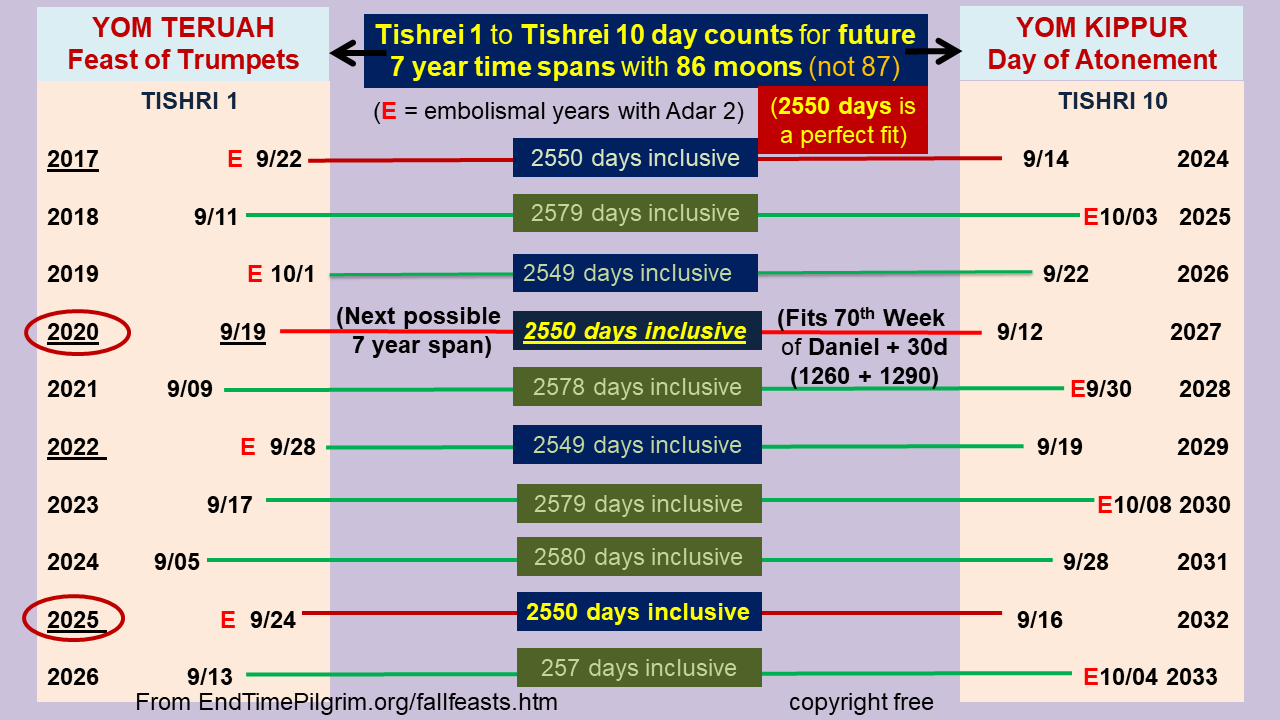
| THE NUMBER OF MOONS FROM TISHREI OF A GIVEN YEAR TO TISHREI 7 YEARS LATER VARIES. IT MAY BE 7 x 12 = 84 MOONS PLUS 2 EXTRA EMBOLISMAL ADAR 2 MOONS = 86 MOONS OR IT MAY BE 7 x 12 =84 PLUS 3 EXTRA EMBOLISMAL ADAR 2 MOONS = 87 MOONS. THOSE SEVEN YEAR SPANS CONTAINING 86 MOONS MATCH UP PERFECTLY THE TIMESPAN BETWEEN THE NEXT TWO FEASTS OF ISRAEL THAT ARE DUE FOR FULFILMENT. FROM TISHREI 1, (THE FEAST OF TRUMPETS), IN CERTAIN YEARS AND TERMINATING ON TISHREI 10, THE DAY OF ATONEMENT, DAY OF RECKONING, DAY OF JUDGEMENT SEVEN YEARS LATER THE TIME ELAPSED IS EXACTLY 2550 DAYS. THIS IS THE EXACT NUMBER OF DAYS, (1260 + 1290 DAYS), WHICH ENCOMPASSES THE 70TH WEEK OF DANIEL. |
| BELOW WE SEE HOW THE METONIC CYCLES ARE LAID OUT ACROSS SUCCESSIVE 7 YEAR SPANS OF YEARS. WE ALSO NOTICE THAT THESE TISHREI TO TISHREI TIMESPANS ARE EITHER 87 MOONS OR 86 MOONS. THOSE TIMESPANS OF 86 MOONS FIT THE 70TH WEEK OF DANIEL SO PERFECTLY THAT WE ARE BOUND TO CONCLUDE THAT THE NEXT TWO HEBREW FEASTS DUE TO COME UP FOR FULFILLMENT, NAMELY THE FEAST OF TRUMPETS AND THE DAY OF ATONEMENT ARE IN FACT THE VERY TWO FEASTS THAT MARK THE BEGINNING OF THE 70TH WEEK OF DANIEL AND THE END OF THE 1290 DAYS THE ANGEL GABRIEL SPOKE OF IN HIS MESSAGE TO DANIEL. (DAN.12:11) THE 1290 DAYS EXTEND OUT 30 DAYS BEYOND THE 1260 DAYS OF THE LATTER HALF OF THE 70TH WEEK OF DANIEL THESE EXTRA 30 DAYS MAY BE A GRACE PERIOD IN ASSOCIATION WITH THE BATTLE OF ARMAGEDDON THAT WILL CULMINATE ON THE FINAL DAY OF RECKONING OR DAY OF ATONEMENT THAT WILL MOST CERTAINLY MARK THE LAST DAY OF THIS AGE. THE FEAST OF TRUMPETS AND THE DAY OF ATONEMENT ARE THE FIRST TWO OF THE THREE FALL FEASTS OF ISRAEL. THESE FEASTS, #'s 5, 6, & 7 HAVE YET TO BE FULFILLED IN THE NEW COVENANT. HOLY HISTORY HAS YET TO REVEAL THESE EPIC EVENTS TO US. THEY ARE OUT THERE IN FUTURE HISTORY. AND SO THESE UPCOMING TWO FALL FEASTS, THE FEAST OF TRUMPETS AND THE DAY OF ATONEMENT MARK OUT THE FINAL SEVEN YEARS OF THIS AGE. AND THEY DO IT WITH TOTAL AND ABSOLUTE PRECISION. |
|
Number of moons in 7 Years beginning on Rosh Hoshanah 2012 |
2012-2013 12 moons |
2013-2014 13 moons |
2014-2015 12 moons |
2015-2016 12 moons |
2016-2017 13 moons |
2017-2018 12 moons |
2018-1019 13 moons |
87 moons (Fails to qualify for 70th week) |
|
Number of moons in 7 Years beginning on Rosh Hoshanah 2013 |
2013-2014 13 moons Passover ECLIPSE |
2014-2015 12 moons |
2015-2016 12 moons |
2016-2017 13 moons |
2017-2018 12 moons |
2018-1019 13 moons |
2019-2020 12 moons |
87 moons (Fails to qualify for 70th week) |
|
Number of moons in 7 Years beginning on Rosh Hoshanah 2014 |
2014-2015 12 moons 3 Holy Day ECLIPSES |
2015-2016 12 moons |
2016-2017 13 moons |
2017-2018 12 moons |
2018-1019 13 moons |
2019-2020 12 moons |
2020-2021 12 moons |
 86 moons
 (Qualifies for the 70th week) |
|
Number of moons in 7 Years beginning on Rosh Hoshanah 2015 |
2015-2016 12 moons 2 Fall Feast ECLIPSES |
2016-2017 13 moons |
2017-2018 12 moons |
2018-1019 13 moons |
2019-2020 12 moons |
2020-2021 12 moons |
2021-1022 13 moons |
87 moons (Fails to qualify for the 70th week) |
|
Number of moons in 7 Years beginning on Rosh Hoshanah 2016 |
2016-2017 13 moons; & TOTAL SOLAR ECLIPSE 8/21/17 crossing the USA! |
2017-2018 12 moons |
2018-1019 13 moons |
2019-2020 12 moons |
2020-2021 12 moons |
2021-1022 13 moons |
2022-2023 12 moons |
87 moons (Fails to qualify for 70th week) |
|
Number of moons in 7 Years beginning on Rosh Hoshanah 2017 |
2017-2018 12 moons |
2018-1019 13 moons |
2019-2020 12 moons |
2020-2021 12 moons |
2021-1022 13 moons |
2022-2023 12 moons |
2023-1024 12 moons |
86 moons (Qualifies for the 70th week) |
|
Number of moons in 7 Years beginning on Rosh Hoshanah 2018 |
2018-1019 13 moons |
2019-2020 12 moons |
2020-2021 12 moons |
2021-1022 13 moons |
2022-2023 12 moons |
2023-1024 12 moons |
2024-2025 13 moons |
87 moons (Fails to qualify for 70th week) |
|
Number of moons in 7 Years beginning on Rosh Hoshanah 2019 |
2019-2020 12 moons |
2020-2021 12 moons |
2021-1022 13 moons |
2022-2023 12 moons |
2023-1024 12 moons |
2024-2025 13 moons |
2025-1026 12 moons |
86 moons (Qualifies for the 70th week) |
|
Number of moons in 7 Years beginning on Rosh Hoshanah 2020 |
2020-2021 12 moons |
2021-1022 13 moons |
2022-2023 12 moons |
2023-1024 12 moons |
2024-2025 13 moons |
2025-1026 12 moons |
2026-2027 12 MOONS! FAULT in CYCLE! |
86 MOONS! (So this sabbatical does in fact qualify for the 70th week of Daniel!) |
|
Number of moons in 7 Years beginning on Rosh Hoshanah 2021 |
2021-1022 13 moons |
2022-2023 12 moons |
2023-1024 12 moons |
2024-2025 13 moons |
2025-1026 12 moons |
2026-2027 12 MOONS! FAULT in CYCLE! |
2027-2028 12 moons |
87 moons (Fails to qualify for 70th week) |
|
Number of moons in 7 Years beginning on Rosh Hoshanah 2022 |
2022-2023 12 moons |
2023-1024 12 moons |
2024-2025 13 moons |
2025-1026 12 moons |
2026-2027 12 MOONS! FAULT in CYCLE! |
2027-2028 12 moons |
2028-1029 12 moons |
86 moons (Qualifies for the 70th week) |
|
Number of moons in 7 Years beginning on Rosh Hoshanah 2023 |
2023-1024 12 moons |
2024-2025 13 moons |
2025-1026 12 moons |
2026-2027 12 MOONS! FAULT in CYCLE! |
2027-2028 12 moons |
2028-1029 12 moons |
2029-2030 13 moons |
87 moons (Fails to qualify for 70th week) |
|
Number of moons in 7 Years beginning on Rosh Hoshanah 2024 |
2024-2025 13 moons |
2025-1026 12 moons |
2026-2027 12 MOONS! FAULT in CYCLE! |
2027-2028 12 moons |
2028-1029 12 moons |
2029-1030 13 moons |
2030-2031 12 moons |
87 moons (Fails to qualify for 70th week) |
|
Number of moons in 7 Years beginning on Rosh Hoshanah 2025 |
2025-1026 12 moons |
2026-2027 12 MOONS! FAULT in CYCLE! |
2027-2028 12 moons |
2028-1029 12 moons |
2029-1030 13 moons |
2030-2031 12 moons |
2031-2032 12 moons |
86 moons (Qualifies for the 70th week) |

|


|

|
|

|

|

|
