

A study by Gavin Finley MD
endtimepilgrim.org
SUMMARY: The two turtledoves in holy scripture and in literature present a picture of devotion and covenant lovingkindness. It is a sublime vision of earthly love and friendship. Two is the number of witness. One person is bringing a witness on behalf of his friend, his companion. One individual is standing up on behalf of the other.
In the Hebrew sacrificial system the sacrifice of the two turtledoves is an acceptable offering for the poor. It is an offering that brings peace with God.
Here is how it works. The two turtledoves are accepted as a pair for entry into covenant with God. The blood of the two turtledoves is sprinkled not on the altar but against the sides of the altar.
This is the very same altar upon which the Sacrifice Lamb is offered. The shed blood of Israel's promised Sacrifice Lamb is in view here and provides the key to it all. See this YouTube video on the true essence and meaning of Passover. The blood of Israel's Messiah will provide the ultimate atoning blood of atonement and reconciliation. See this YouTube video on the final Yom Kippur, Jubilee of Messiah, and Day of Reckoning This blood of the Lamb brings us into the Eternal Covenant to establish our Salvation, our ensuing Sanctification, and our ultimate Glorification. This is the holy blood that brings mankind eternal redemption and everlasting peace with God. True salvation is a one on one relationship between an individual and His or her God. This salvation now available to us personally. The blood of the Lamb speaks of a blood covenant relationship of the first order.
So what can we say about the blood offering of the two turtledoves? The sprinkling of the blood of the two turtledoves against the altar provides a valuable clue to those earthly covenant affairs which lead people on into the ultimate Eternal Covenant with God. As we shall describe further on in this article the two turtledoves speak of a second order blood covenant relationship.
Evangelical Bible believing Christians, in their zeal for first-order covenant with God through the Gospel have neglected this issue. But as we read Matthew 25:34-40 apparently God pays special attention to this secondary covenant matter. While it is not a one-on one relationship and this second order covenant is established by one person on behalf of another person. And whilst this is not a one-on-one direct blood covenant connection it is still acceptable to God. This second order covenant appears to have special application to the testimony of deep relationships between two people here below in these earthly realms. This will become extremely important as we look into the Millennium of Messiah at the close of this age.
The Sheep-Goat Judgment is a major cross-reference to the story of the two turtledoves. It brings in some other complementary elements to the story of the two turtledoves that help us to understand what is going on here. We see that there are noteworthy covenant matters enacted between two people and given witness to here on earth. This is not the Eternal Covenant between God and a person. Nor is the entry of souls into heaven in view here. But here we see certain mortals being given special grace and permission to pass into the earthly Millennium of Messiah. This is the judgment of the nations. It is the judgment of the people left alive on earth at the end of this age. It is not the final entry of souls into the heavenly realms. But rather we see an entry of mortals into Messiah's future Kingdom. His Divine rule will be established on earth for a literal thousand years. Certain unsaved people, (likened to sheep rather than goats), are granted entry, (even passports, if you will), for entry into the Millennial Kingdom. They are permitted entry on the basis of the 'second order' covenant we see outlined by Jesus in the Sheep-Goat Judgment. (Mat.25:31-46) This is showcased in the Temple sacrifices when the two turtledoves are accepted in lieu of a lamb.
As this age comes to its tumultuous end there will still be many people who have not been saved. Many will not yet have come into direct covenant with Messiah. But they will have come into covenant connection with certain covenant friends of Messiah and paired up with them as friends. And so both covenant partners, like two turtledoves together in the wilderness, are a pair. And they are accepted by God as a pair. The one who is not yet in direct first order covenant with Messiah is not forgotten. He comes into Millennial citizenship paired up with, (or sponsored by), his partner, someone who is in direct covenant with Messiah. The person outside the covenant of God has come into this privilege by a blood covenant connection with his friend. He has known and has cared for his friend in a relationship of devotion and blood covenant lovingkindness. He took risks for him. And he looked after him when his friend was in a wilderness experience of tribulation and need. The one who was not in the covenant with Messiah cared for the one who was. So Messiah receives and accepts both of them as a pair. And so ends the drama and the romance of the two turtledoves in the end-time story.
As the saga unfolds we see that the one who is in covenant with Messiah is under deadly persecution. In the course of events he is taken away in the tribulations of life. His friend experiences a terrible sense of personal loss. Jesus has said, "blessed are they that mourn". And so the one who is found mourning in the wilderness for his lost covenant partner will soon discover that all is not lost. In fact he has been truly blessed. As a direct result of his acts of kindness he in turn is about to be shown blood covenant lovingkindness. Because the Friend of his friend just happens to be the returning Messiah! To cap things off, his mate, the one who had been lost, has now been found.
In this case we see that grace and peace with God came on the basis of a second order covenant relationship. For the lonesome dove who has shown kindness and devotion to his friend things have suddenly changed for the better. His mourning turns into joy. And he finds himself ushered into the glorious 1000 year earthly Millennial Kingdom of Messiah.
TWO TURTLEDOVES: A SYMBOL OF DEVOTION
AND BLOOD COVENANT LOVINGKINDNESS.
The springtime brings the blooming of the flowers and the budding forth of new life. And with that the coming of the mourning doves with their plaintive cooing. In the valley of the Jordan an allied species, the palm dove, or Egyptian 'Turtur Aegyptus' ('turtledove' is derived phonetically from this) is still common today. From its habit of pairing for life it was a poetic type and symbol in the Hebrew mind of that character quality of fidelity and faithful love in betrothal.
In the Song of Songs (of Solomon) there are many allusions to the dove. The cooing of the dove is an unmistakable expression of pining and wooing. Out there in the wilderness someone is calling to another. They long to know them and have them by their side. It is the call of the lost and the lovesick. They may be going through a time of desolation. They may even be cut off from the normal flows of life. Yet in the midst of this separation they are finding themselves in the midst of a serendipity. They are being drawn into a relationship of devotion and love. The latter rains have come and brought revival. The flowers are in bloom and the fig tree puts forth its first figs. Someone is calling them and tugging at their heart. And "the sound of the turtledove is heard in our land." Here is some of that poetry from the Song of Songs.
"My beloved speaks, and says to me:
Arise, my love, my fair one,
And come away.
For behold, the winter is past,
The rain is over and gone.
The flowers appear on the earth;
The time of singing (of birds) has come,
And the voice of the turtledove is heard in our land.
The fig tree puts forth and ripens her green figs,
And the vines are in blossom and give forth their fragrance.
Arise, my love, my fair one, And come away!'" -Song of Songs 2:10-13 AMPL.

In the call of the dove there is a wooing quality that is well known and frequently used in the literature of romance. The plaintive cooing is a reflection of that pining or mourning for a lost lover. It is a cry to one who is out there and yet somehow lost to us. In Australia the traditional call to someone who is lost in the bush is"coo-ee".Ask an Australian why he calls into the wilderness for someone who is lost with a call of a dove and he will probably not be able to tell you. But we must assume that the call was passed down the generations in a collective memory going back into antiquity. It is a call by someone to a mate who is out there lost in the bush. See the Australian poem"Lost"by 'Banjo' Paterson. From out of the American west came similar stories. The novel "Lonesome Dove" carries with it a similar theme.
So the mourning spirit we oftentimes view as an all bad "negative" emotion in times of tribulation and loss is actually more wonderful than it might appear. Wrapped up in the experience of mourning is the call of the Beloved for the one who was lost. It is a wooing in the song of doves, even out there in the wilderness. Early in the morning the voice of the turtledove is calling. Reverberating in our soul is the memory of Someone, Someone we may have forgotten. But now, suddenly, we find our heart is stirred. And we begin to remember times past. We remember and we mourn. We long for and pine for a person who has passed from our presence and is now out there somewhere beyond our reach. In this separation, perhaps even exile, we find ourselves remembering them with great love. And we long to be reunited with them. Through the untoward circumstances of life they have been lost to us. Things have all changed in our life. And now we realize just what a treasure they were to us. This is a bittersweet state. And it comes from an unfulfilled and unconsummated relationship that now stirs within us in the deep places of the heart.
But in the nature of things bittersweet all is not lost. And as we shall discover, there is a wonderful redemptive message in all this. The mourning dove imagery is telling us a story, even the 'rest of the story'.
Here is a sketch of what is going on here. A magnificent spiritual threshold is laid out before us by God. Many are being shown the Way. Some enter in and find fulfillment. Others need a little help from their friends. And they receive that help. Because in this Way vast numbers of lost people are destined to come into redemption, salvation, and full restoration in God. This is the spiritual message that is seen in the witness of the two turtledoves. The story not only relates to the deeper covenant relationships between people here below. It consummates in the end-time drama and the entry of many into the coming glorious Millennium of Messiah.
Why are there two turtledoves? What is the significance of there being two? The Hebrew sacrificial system provided for the poor. Many could not afford to bring a lamb. So God made a way for them. They could bring two turtledoves in lieu of a lamb. Sheep and bulls are offered singly. And they are cut down the middle into two halves. Yet doves are not cut down the middle. They are offered whole and in pairs. In both cases we see 'two'. What is God showing us here?
It seems that 'two' is the number of "witness" in scripture. In matters of life and death Hebrew Mosaic law established this standard. A person is to be judged on the testimony of two witnesses. (Deut 17:6,19:15) Jesus confirms this principle in the New Covenant for the Church and for the Kingdom of God. ( See Mat.18:16)
In the story of the two turtledoves we see a picture of a deep and profound love relationship. It is one of great devotion and blood covenant commitment. This is just one part of the great adventure and the divine romance of the latter days. A mourning dove is crying out for her mate in the wilderness. And someone from afar is answering the call. And they are coming.
In this devotion we see the development of a relationship of tender mercies that turns out to be redemptive. Somebody is covering for another. That somebody is their friend. This turns out to be a divine serendipity. Because this friendship, which at the time may have seemed so ordinary, now counts for something greater, far more significant than we could have imagined.
So this is why we see the story of the two turtledoves in the redemptive story of Holy Scripture. It is associated with the Sacrifice Lamb and the blood of redemption offered up at Passover.
This is also a story of a surprising reprieve at a time of crisis and judgment. Someone is covering for another. So when the person in question comes up for judgment the matter moves beyond the legal standing of that one person alone. The person in question may not themselves have the vital personal covering to stand alone. But someone, is with them. They are standing by their side. Their friend stands with them in a blood covenant or blood brother sort of a way. And before the Judge the one who has come alongside is now testifying on behalf of his friend. Someone is vouchsafing the worth of another based upon tender mercies shown and lovingkindness remembered. The person in question is being remembered before the Judge of the earth and before the cloud of witnesses for things they have done. And the reason it is so important is because it happened in the realms of blood covenant lovingkindness.
In the story of the two turtledoves the beloved one has been taken from them. But he is longed for with deep emotion. The breft one who has lost his mate is mourning, even as a the mourning dove. This is our clue to the meaning of the two turtledoves as we see it expressed in the Hebrew sacrificial system. The two turtledoves in scripture help us to understand the meaning and destiny of those many people who do not have a personal covenant with Christ when He returns but once had a deep covenant relationship with those who did. (Zech.12:10-13:1) There is a missed relationship here, not only for a lost friend but for the Friend of his missing friend. At His return many people will mourn for Messiah, the Friend of their missing friends. They will mourn for the Messiah they had not come to know, as for a lost firstborn son. It is the firstborn who is to be redeemed with the blood of the Sacrifice Lamb at Passover. (Exo.34:20).
So is there hope?
Will two turtledoves suffice?
The story of the two turtledoves is a love story. So of course there is hope. A "true love" is also singing in that centuries old Christmas carol, "The 12 days of Christmas".
"On the second day of Christmas,
My true love sent to me,
Two turtledoves,
And a partridge in a pear tree."
TWO TURTLEDOVES AND THE CALL OF A LOST DOVE
TO HER MATE ACROSS A HOWLING WILDERNESS
EVEN IN THE MIDST OF TRIBULATIONS.
In the Psalms we also read of the dove in flight from terrors and tribulations. Typically she finds herself deep in the wilderness and alone. She is cut off from the one she loves. It is out there in the wilderness where she remembers her lost mate. She mourns for him with the plaintive call of the turtledove. This theme of the mourning lonesome dove calling to their mate in the wilderness reverberates through our literature.
The song below was written by David as he flew like a dove from the face of Saul.
The flight of the dove is a frequent poetic and prophetic theme in Holy Scripture.
55:1 Give ear to my prayer, O God;
and hide not thyself from my supplication.
55:2 Attend unto me, and hear me:
I mourn in my complaint, and make a noise;
55:3 Because of the voice of the enemy,
because of the oppression of the wicked:
for they cast iniquity upon me, and in wrath they hate me.
55:4 My heart is sore pained within me:
and the terrors of death are fallen upon me.
55:5 Fearfulness and trembling are come upon me,
and horror hath overwhelmed me.
55:6 And I said,
Oh that I had wings like a dove!
for then would I fly away, and be at rest.
55:7 Lo, then would I wander far off,
and remain in the wilderness".
-Psa.55:1-7 KJV,
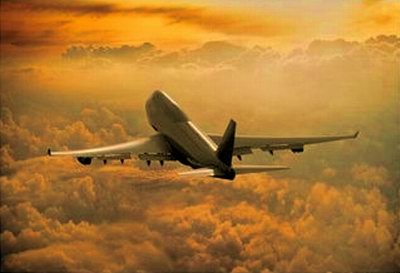
David agonized over the fact that it was a friend that had turned against him. He had been King Saul's champion. They had fought the Philistines together. Now it was this friend who was fully determined to hunt him down and kill him. It was in his flight from Saul, in fear of his life and out there deep in the wilderness, that David was wooed by the God of Israel. Even in this time of great tribulation David responded in faith rather than in fear and anger. Wrapped up in this divine covenant with God David expressed no bitterness or depression. Quite the opposite. During his "dark night of the soul" David wrote some of the most beautiful verse in all of literature. His songs are still available for us to read 3,000 years later. They are right there in the Psalms. In Psalm 23 David tells of the love he shared with his Divine Companion. His Friend was right there with him in his trials. David saw Him prepare a table before him right in the presence of his enemies. David tells of his cup running over.
Is there a lesson for us in this story of David's flight as a dove into the wilderness?
Shall we too experience this reality, even in the coming end-time drama?
TWO TURTLEDOVES AT PASSOVER
IN THE HEBREW SACRIFICIAL SYSTEM
In ancient Israel it was in the Providence of God that large numbers of doves were all around and easily caught as the Feast of the Passover approached. Not all had the means to take a lamb for a burnt offering. For the poor, those who could not afford a lamb, God had allowed the offering of two turtledoves in lieu of a lamb. This was the sacrifice offered by Joseph and Mary, the parents of Jesus as they went up to the feast.
LUKE 2
21 And when eight days were completed for the circumcision of the Child, His name was called Jesus, the name given by the angel before He was conceived in the womb. 22 Now when the days of her purification according to the law of Moses were completed, they brought Him to Jerusalem to present Him to the Lord 23 (as it is written in the law of the Lord, "Every male who opens the womb shall be called holy to the Lord"), 24 and to offer a sacrifice according to what is said in the law of the Lord, "A pair of turtledoves or two young pigeons."
It seems that God, then as now, is more interested in the heart attitude when a presentation is made to Him than the sacrifice itself. (1Sam.15:22)
In the Levitical law a pair of turtledoves is acceptable to God as an offering in lieu of a lamb.(Lev.5:7, 14:22) Why should this be? Surely the absolute requirement for entry into the covenant of God would be the lamb, typifying as it does, the Lamb slain from the foundation of the earth. (Rev.13:8) Is God being slack here? Why does the Levitical Law permit the offering of two turtledoves for those "too poor" to provide a lamb? The blood of the turtledove is wrung out on the sides of the altar. (Lev. 1:14-15). This is interesting. Why the sides of the altar and not on the altar? And why mourning doves? What is God telling us in this picture here?
TWO TURTLEDOVES;
A PICTURE OF FIDELITY AND DEVOTION IN LOVE .
A DOVE IS COOING IN THE WILDERNESS,
AND MOURNING FOR A LOST MATE.
As we look at the mourning dove is there some virtue in mourning? Does God take note of a pining over a long lost Love? Will He hear their cry? In the Beatitudes we read,
"Blessed are they that mourn,
For they shall be comforted".
At the climax of history the whole Jewish nation is found mourning over an "only Son", a certain Firstborn son whom they had forgotten. Nationally and climactically, at a defining moment, at a threshold in time, they will remember Him. In that day, even a day of great mourning and repentance, they will restore Him to His rightful place on the throne of their hearts. He is their peace, even the Prince of Peace. And in His righteous rule he brings peace to the heart of the Jew, peace to the Beloved City of Peace, and peace on earth. This epic end-time history is in the future and late in the 70th week of Daniel. It will occur in the city of Jerusalem, the City of God's shalom/peace, even as they are surrounded by the armies of the Nations at the Battle of Armageddon. This is the glorious destiny of the doves of Judah at the end of this age.
ZECHARIAH 12
12:10 "Then I will pour out a spirit of grace and prayer on the family of David and on all the people of Jerusalem. They will look on me whom they have pierced and mourn for him as for an only son. They will grieve bitterly for him as for a firstborn son who has died.
12:12 All Israel will weep in profound sorrow, each family by itself, with the husbands and wives in separate groups. The family of David will mourn, along with the family of Nathan,
12:14 Each of the surviving families from Judah will mourn separately, husbands and wives apart.
ZECHARIAH 13
13:1 "On that day a fountain will be opened for the dynasty of David and for the people of Jerusalem, a fountain to cleanse them from all their sins and defilement."(Zech 12:7-13:1 NLT)
"And so all Israel shall be saved".-Rom.11:26 KJV
TWO TURTLEDOVES AND A DEEP MOURNING FOR A
LOST RELATIONSHIP THAT NEVER BEGAN CAN LEAD
ON TO REDEMPTION, SALVATION, AND RESTORATION.
Can mourning over sin or a lost covenant connection to God lead on to salvation? If that mourning is of a departed soul at the judgment seat of Christ then every evangelical will agree that it will be too late by then. They will be condemned. But what if the persons being judged by Christ are still alive? What if this judgment is being conducted when they are still in their mortal bodies?
If living mortal human beings are being judged for entry into the earthly rule of Messiah, (as we see at the Sheep-Goat Judgment), then this is another matter entirely. These mourning people have the possibility of a future life on earth before them do they not? And now, at the end of the age, we see them mourning and repenting. Will a God of mercy and grace cut them off, along with their little children because they are not yet saved?
Perhaps not. If there is a witness. And herein lies the wonderful message of the two turtledoves. The two are received as an acceptable sacrifice. Because there is a witness! Two is the number of witness. And there are two turtledoves in this picture. God will judge the pair. And the covenant connection Messiah has to one member of the pair will suffice for the other.
Mourning over a lost relationship to God is the first step to repentance. And repentance, crying out to God and laying hold of His blood covenant provision leads on to redemption. Mourning is an essential element of conversion. If we are told by a low grade evangelist to step up to the altar and get a free ticket to heaven and there is no repentance involved then this will not suffice. This quick and easy "cheap deal with Jesus" will not cut it.
God puts a very high premium on true sorrow for sin. Mourning for failure to come to God is a necessary part of repentance. Mourning is an essential element as sinners come into the threshold of salvation. And it is a spiritual condition that receives the favor and grace of God in the time of His judgment. This is made abundantly clear in Ezekiel ch. 9
EZEKIEL 9
3 Now the glory of the God of Israel had gone up from the cherub, where it had been, to the threshold of the temple. And He called to the man clothed with linen, who had the writer's inkhorn at his side; 4 and the Lord said to him, "Go through the midst of the city, through the midst of Jerusalem, and put a mark on the foreheads of the men who sigh and cry over all the abominations that are done within it." 5 To the others He said in my hearing, "Go after him through the city and kill; do not let your eye spare, nor have any pity. 6 Utterly slay old and young men, maidens and little children and women; but do not come near anyone on whom is the mark; and begin at My sanctuary." So they began with the elders who were before the temple.
What does all this tell us about our God and His attitude to wickedness? What does all this tell us about our God and His attitude to a heart that mourns for wasted years spent in sin? In Ezekiel's vision of chapter 9 we go on to read that all who were not mourning over the great wickedness in the city of Jerusalem were slain. Surely there is a salvation or at least a pre-salvation message here. Mourning, while it is not outright proof of covenant does indicate movement toward covenant. Apparently mourning does in some way engender the favor of God. It is often seen in scripture just before or just as a person turns to God. Mourning is commonly seen in the lives of those who are in the process of coming to God. It is the characteristic emotional response of a person as they enter the blood covenant to find redemption and salvation in Christ.
Is the Jewish House of Judah the only people to be found mourning when our Messiah returns? Apparently not. Jesus, in that conversation with four of His trusted disciples on the Mount of Olives, told us privately what would happen at the end of this age.
"Immediately after the tribulation of those days
the sun will be darkened,
and the moon shall not give its light;
the stars will fall from heaven
and the powers of the heavens will be shaken.Then the sign of the Son of Man will appear in heaven,
and then all of the tribes of the earth will mourn,
and they will see the Son of Man
coming on the clouds of heaven
with power and great glory".
The next verse sees Him gather His elect. But what of those who mourn at His coming? What about those people, particularly in foreign countries, who are too "poor in spirit" to have known the coming Messiah personally. What of those who have never "cut the covenant" with Him personally. He is the "Lamb slain from the foundation of the world." (Rev.13:8) And what about the children who never had a chance to know God? Are they all to be consigned to Hell?
Let's take a look at Jesus and His attitude to the little ones who were brought to Him.
"Then they brought little children to Him, that He might touch them;
and bless them but the disciples rebuked those who brought them.10:14 But when Jesus saw it, He was greatly displeased and said to them,
'Let the little children come to Me,
and do not forbid them; for of such is the kingdom of God.10:15 Assuredly, I say to you,
whoever does not receive the kingdom of God as a little child
will by no means enter it.'10:16 And He took them up in His arms,
put His hands on them,
and blessed them."
BLESSED ARE THEY THAT MOURN.
BLESSED ARE THE POOR IN SPIRIT.
Take a trip abroad and you will rapidly appreciate that there are multitudes of spiritually poor people. Even the rich western established church is spiritually poor if it has any connection with the last-named Church of Laodicea. Many believe that it does.-Rev.3:14-18 Our church while it has ornate steeples and retains 94-96% of the tithe moneys for itself may well be spiritually poorer in fact than the hard pressed and persecuted third world church. Many in the suffering church abroad truly understand and operate in blood covenant Christianity. They may be physically poor with not much in the way of material wealth and church buildings. But they are spiritually rich. But most have not yet heard the Gospel. Most people in the teeming millions of India and in the third world many have not heard the gospel even once. Many are still on their way to finding out. They seek to know about that empty part of them that suffers the "angst". Do they hear the wooing voice of God who is reaching out to them as Savior and Friend? It is hard if they have not been presented with the Gospel. Have they had a messenger come to them and present the Good News? Most have not.
Many people around the world are in the process of coming to God. Unfortunately they are under oppressive regimes or struggling to survive. Half the children of this world go to bed hungry and disease stalks the people on the southern latitudes from 10 degrees north of the equator to 30 degrees south of the equator. Many poor people are stymied by a wicked political system and Satan on the loose.
There are three enemies of the Gospel. These are the world system, the flesh, and the devil. During the coming Millennium two of these enemies will be eliminated. Satan will be bound for one thousand years. (Rev. 20:1-3) And the kingdoms of this world will have become the Kingdom of our Lord and of His Christ/Messiah. (Rev.11:15) Both of these enemies currently help to prevent men from hearing the Gospel and coming into union with God. Only the third enemy, our own flesh nature, will stand in the way of the call of God to man in the coming Kingdom of Messiah.
This present evil age with its devil enshrouded spiritual darkness, along with its despotic regimes, its wars and famines have conspired to prevent or delay any evangelical awakening in the lives of most people on this planet. Many evangelicals are in prison in Hindu and Muslim countries as well as under communist regimes. In spite of the claims of big ministries the vast masses of souls on this earth have not yet heard the Gospel. Those who will eventually come have not yet come into a saving contact with God with our present Gospel and missionary outreach. Big ministries will try to give the impression that they have just about wrapped things up and are ready for Messiah to return. But the facts indicate otherwise. The Great Commission is far from complete. Even at the end of the coming Great Tribulation there will still be multitudes of such unsaved people whom we may well believe will have not been marked or initiated into the 666 devotion and system of the Antichrist.
We are not inclined to consider these things. In the western countries we hear the gospel message frequently. If we reject it or neglect it we shall be without excuse. But many of these dear people in places abroad, especially children, have not heard the Gospel presented to them even once! Are we to lump all these in with those wicked ones who have taken the mark and who shake their fist at heaven and curse the returning Christ? If the scriptures say, "Blessed are they that mourn" are these people to be considered as just "too late" for any opportunity to go on with God into His coming Kingdom?
TWO TURTLEDOVES:
AN ACCEPTABLE SACRIFICE IN LIEU OF A LAMB:
TWO TURTLEDOVES: A PICTURE OF SECOND ORDER
BLOOD COVENANT BETWEEN GOD AND MAN.
AN IMPORTANT KEY TO OUR UNDERSTANDING
OF THE SHEEP-GOAT JUDGMENT AND
THE ENTRY QUALIFICATIONS FOR THOSE
COMING INTO THE MILLENNIUM OF MESSIAH.
When the returning Messiah judges between the sheep and the goats He is judging people and nations. This means He is judging Gentile/heathen people who have not come into the covenant and the commonwealth or citizenship of Israel. (Eph.2:12-13) Are all these yet unsaved people to be condemned? Are all to be considered goats to be sent off into outer darkness? Have every one of them, including the little children truly "had their chance"? Are they to be condemned?
If not, then might the coming Millennium of Messiah be all about providing for those masses of mankind who are still lost and yet who are truly penitent? At the Sheep-Goat Judgment He will bless those that mourn. They will be given opportunity to come to know the Messiah in the peaceful context of His coming Kingdom on earth.
Shepherds tell us that sheep will only drink from still waters. They will not drink from a raging river. At the end of this age there will be much political and religious turmoil. Many will have longed to know God but never had the chance. They have not had the chance to drink from the waters of life. Will they ever be given that opportunity? Will they be led by Messiah into green pastures? Will they be and spiritually fed by the still waters in the beauty of His restored earth? Or are these people who mourn at the sixth seal all to be damned for ever along with the wicked?
What is your heart and conscience saying? Do we know the heart of the Shepherd on this?
Fortunately we are not left to guess or to be either judgmental or sentimental in this matter. The Bible tells us what will happen. God will judge in righteousness in this matter. The goats will be cut off and go. And the sheep will stay on and find life.
Matthew 25:31-46 lays out for us the essential features of the sheep and goat judgment. It is a judgment of mortals here on earth at the end of the age. They are not saved, or they would have been glorified. Now they appear before the royal authority of the coming Kingdom of God. The sheep-goat judgment is not a judgment of souls at the gates of heaven. This judgment is the Judgment Seat of Christ. (2Cor.5:10 And it is not the Great White Throne judgment seen at the end of the Millennium. (Rev.20:11-15) This is a judgment on the earth of living mortal human beings. This is very important difference.
Jesus even tells us how He will judge between the sheep and the goats. He tells us quite clearly in Matthew 25:31-46 just why the sheep people are granted entry into the Kingdom of Messiah. The judgment is based on how these unsaved people treated His covenant Elect in their time of need. Presumably, the time during which this kindness was shown was during the Great Tribulation. Yet these people have not yet been saved at the time of His coming. There is no mention at all of them being in direct covenant relationship with Christ.
We see clearly in Mat.25:31-46 that the goats, people who are independent and about there own business, are damned. So why are the sheep blessed? It would appear that these specially selected unsaved people are being given a passport into the earthly Kingdom of Messiah. The favor being shown to them here is on the basis of an indirect or second order covenant. They receive the favor of Messiah by virtue of an indirect covenant connection. These people are covenanted to Messiah through others, other people who just happen to be Messiah's friends. His tribulation saints, (People who are in a blood covenant relationship with Messiah), are the vital link here. The sheep of God's pasture may not yet have become Messiah's people. But they have been friends with Messiah's people. They ministered to them during their trials and tribulations here on earth. The goats were people who couldn't care less about Messiah's friends in their time of need.
This is apparently is a huge issue with Messiah. The sheep people had shown God's covenant friends covenant lovingkindness. They had shown themselves to be true friends. That meant quite a lot to the returning Messiah. These people, event though they had not been saved, had in many cases risked their own lives to feed, cloth, and help these friends, who were also friends of Messiah in their time of need. Because of this covenant lovingkindness they have shown Messiah does not forget them. He cannot forget them. So like the two turtledoves, God is judging them as a pair. The tribulation saints, (who are now glorified and in spiritual bodies), are more or less sponsoring those who were paired with them and who still remain on earth in mortal bodies. These were the ones who had shown them true blood covenant lovingkindness. These mortal human beings left on earth are their friends. And yet at the time of the sheep-goat judgment have still not been saved.
The onrush of events in the last days will be tumultuous. Open preaching of the Gospel by the saints will not be possible except possibly for those who have been exiled in the Bozrah incarceration. The saints will be under the persecution throughout the entire 70th week of Daniel, the final seven years of this age. First the persecutions will come under the harlot system. And then even greater persecution will come under the 666 system of the Antichrist. John's vision of the woman of Revelation 12 suggests that large numbers of Christian believers may be sequestered away during the last half, (1260 days) of this age. They will be flown to a place where they can be nurtured in spiritual things. (Rev.12:6 and Rev.12:14)
It seems that many people who have become inclined to respond to God never get the opportunity. But they did have an opportunity to show the Tribulation Saints some kindness somewhere down the line. Then at the end of the age they see the coming Christ. At that time they will mourn. They will mourn over their lost opportunity to have come to know the Savior. The sands of time have run out. Now the final ultimate Day of Atonement has come and gone. The sun turns to darkness and the moon to blood and they have come to the last day of this age. The Day of the Lord comes. And as the heavens open they see the sign of the Son of Man. On that Day many will mourn. They will mourn when they realize that He was the Savior they had never really known.
The Antichrist and the wicked will be carried off as the tares from the wheat. (Mat. 13:30 & 40-42) The wicked will be destroyed on the awesome Day of His coming. (Isaiah 63) But what about these people who are mourning? Will they receive words of comfort in that Day?
Perhaps they will. Because Jesus tells us quite clearly that at His coming some group of people, people He judges as sheep and not goats, will hear these words;
"Come, you blessed of my Father
You who are favored of God
and appointed to salvation
Inherit the kingdom prepared for you
From the foundation of the world."
"...........Inasmuch as you did it
to the least of these my brethren,
You did it to me."
THE END-TIME DRAMA AND THE FLIGHT OF THE DOVE FROM TRIBULATIONS. THE COMING OF SPRINGTIME ANDTHE TIME OF LOVE EVEN AS THE GOD OF ABRAHAM IS CALLING HIS PEOPLE TO "COME AWAY".AND THE SOUND OF THE TURTLEDOVE IS HEARD IN THE LAND.
Two Turtledoves in lieu of a Lamb?
The lamb is cut down the middle and offered on the altar.
The two turtledoves are not cut but the blood is offered on the sides of the altar or against the altar of covenant. The blood is not sprinkled on the altar but on the sides. This is significant.
It is as if God is saying,
"Poor though it may be, I will accept the offering of these two turtledoves.
And by this means I will woo every last one of my people to Myself.
I will woo them and draw them into My Kingdom from humble beginnings. And I will bring them on into My Millennial Kingdom where they can be led to green pastures. There by the still waters they will hear my voice. At that place they will come into a full realization of My covenant.
Yes the scriptures are a book of Law. But our God, the Holy One of Israel, always was and always will be a gracious God. He will receive those who come to Him with a contrite heart. David discovered this in the matter of his sin with Bathsheba and the death of her husband Uriah. He was chastened and he repented, crying out to God for His mercy. The God of Israel meets His people at heart level. David even wrote a song about it. (Psalm 51)
PSALM 51
16 For You do not desire sacrifice, or else I
would give it; You do not delight in burnt offering.
17 The sacrifices of God are a broken spirit,
A broken and a contrite heart--
These, O God, You will not despise. (Psa.51:16-17)
The poetry and the themes which run through scripture reveal a God who even in the time of judgment is continually wooing us at the level of our heart. Even in our tribulations as we are scattered into a howling wilderness our God is there beside us.
Our journey into Him is a love walk. And He gives us a song in the night.
PSALM 42
7. Deep calleth unto deep at the noise of thy waterspouts:
all thy waves and thy billows are gone over me.
8. Yet the LORD will command his lovingkindness
in the daytime,
and in the night his song shall be with me,
and my prayer unto the God of my life. (Psa. 42:7-8)
Grace and peace to the saints.